

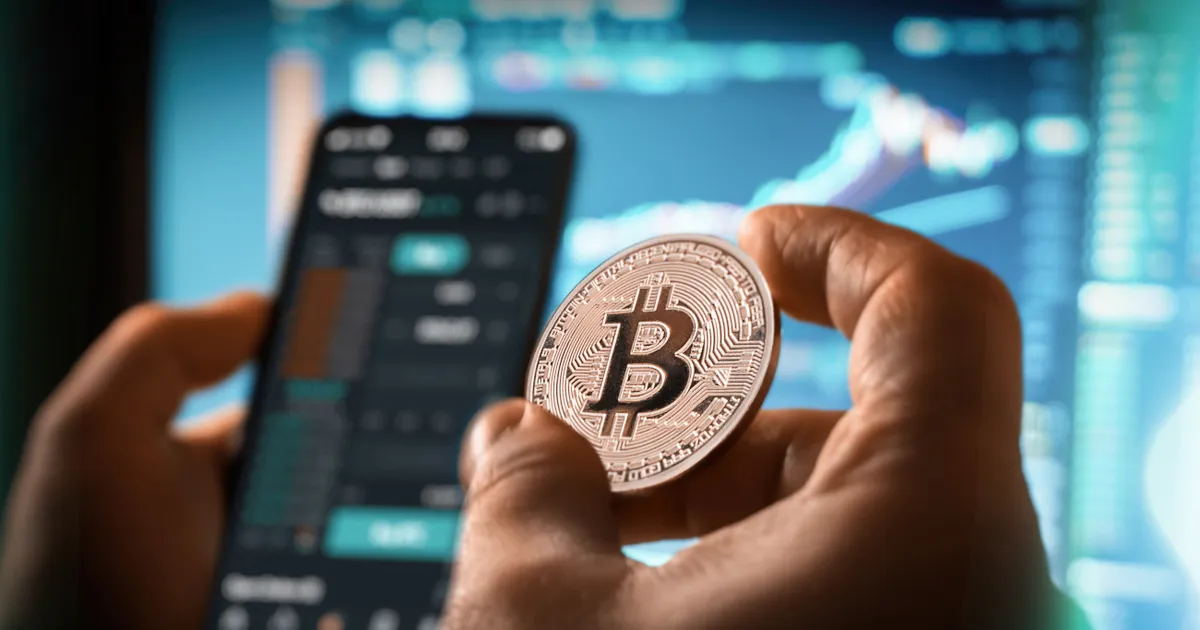
Bitcoin is the first and most widely recognized cryptocurrency, created to function as a decentralized form of digital money. Instead of relying on banks or governments, it runs on a global network of computers that securely verify transactions through blockchain technology. Its limited supply, strong security, and independence from traditional financial systems have made Bitcoin both a popular investment and a groundbreaking innovation in how people think about currency and value.
 Shutterstock: Creativan
Origin of Bitcoin
Bitcoin was introduced to the world in 2008, under the pseudonym “Satoshi Nakamoto”. A paper titled “Bitcoin: A Peer-to-Peer Electronic Cash System” was released, laying the groundwork for what would become the world’s first decentralized cryptocurrency. Unlike traditional currencies, Bitcoin wasn’t birthed from a central authority or institution but was birthed from an idea of creating a transparent, decentralized financial system.
How Does It Work?
At its core, Bitcoin operates on a technology called blockchain. This is a shared public ledger containing all transaction data from the inception of the Bitcoin network. A block is essentially a collection of transactions, and once it’s completed, it joins the chain in a linear, chronological order. This system ensures transparency and prevents tampering since altering a single block would require changing all subsequent blocks, which is computationally improbable.
Bitcoin miners play a pivotal role in this process. Using powerful computers, they solve complex mathematical problems, a process which, when successful, adds a new block to the chain and rewards the miner with newly minted Bitcoins. This process not only keeps the network secure but also releases new Bitcoin into circulation.
Why Is It Popular?
Bitcoin’s popularity is a culmination of several factors:
- Decentralization: Bitcoin has no governmental or institutional control, granting users more autonomy over their finances.
- Transparency: With its open-source nature, anyone can review its code or transaction history.
- Lower transaction fees: Compared to traditional online transaction systems, Bitcoin typically offers lower fees.
- Potential for growth: Many investors view Bitcoin as a form of “digital gold” with appreciative potential.
The Future of Bitcoin
Speculating the future of Bitcoin divides opinions. Some believe it will become a mainstream currency, while others think it will remain a niche financial product. What’s undeniable is its innovative impact on the traditional financial system, challenging established norms and paving the way for other cryptocurrencies.
Bitcoin as a Store of Value
Often referred to as “digital gold”, Bitcoin has established itself as a store of value for many investors. Like gold, Bitcoin is scarce – its supply is capped at 21 million coins. This limited supply, coupled with increasing demand, has led many to view it as a hedge against inflation and a way to preserve wealth, especially in turbulent economic times.
Environmental Concerns
One cannot discuss Bitcoin without addressing its environmental footprint. Bitcoin mining is an energy-intensive process. Large-scale mining operations, often located in regions where electricity is cheap, consume vast amounts of power.
This has raised concerns about the environmental impact, particularly in terms of carbon emissions. Some argue that as renewable energy becomes more widespread, the environmental impact of Bitcoin mining may decrease, but it remains a topic of heated debate.
Challenges Ahead
While Bitcoin has enjoyed a decade of growth and acceptance, challenges lie ahead:
- Scalability: As the Bitcoin network grows, so does the number of transactions. The current mechanism can process a limited number of transactions per second, leading to potential delays.
- Regulatory uncertainty: As governments around the world grapple with how to classify and regulate Bitcoin, potential regulatory crackdowns or policy shifts could affect its adoption and value.
- Competition: While Bitcoin was the pioneer, thousands of other cryptocurrencies, known as “altcoins”, have since emerged. Some of these offer improved features and could potentially challenge Bitcoin’s dominance in the future.
Bitcoin Competitors
While Bitcoin stands tall as the pioneer of the cryptocurrency movement, the digital financial landscape has evolved to witness the emergence of numerous other cryptocurrencies vying for prominence. Often referred to as “altcoins” (alternative coins), these Bitcoin competitors offer varied features, objectives, and technological bases. Some of the most noteworthy competitors that have carved a niche for themselves in the crypto ecosystem include:
- Ethereum (ETH): Perhaps the most well-known competitor to Bitcoin, Ethereum offers more than just a digital currency. It introduced the concept of “smart contracts”, allowing developers to build decentralized applications (dApps) on its blockchain. Its native currency is called Ether.
- Ripple (XRP): Unlike most cryptocurrencies, Ripple focuses on enabling real-time global transactions for banks. It offers faster and cheaper international transactions, making it a favorite for many financial institutions.
- Litecoin (LTC): Dubbed as the silver to Bitcoin’s gold, Litecoin offers a faster transaction time and a different hashing algorithm. It was created by Charlie Lee in 2011 as a lighter version of Bitcoin.
It’s crucial to understand that the term “competitor” doesn’t necessarily mean they’re trying to replace Bitcoin, but rather they offer alternative use cases and functionalities in the vast and varied landscape of cryptocurrencies.
Learn More About Cryptocurrencies
Bitcoin, as the first and most well-known cryptocurrency, has paved the way for a more decentralized and innovative financial ecosystem. Its journey, marked by highs and lows, has both inspired and cautioned investors, technologists, and policymakers.
As you continue your exploration into this fascinating subject, always remember that the crypto landscape is vast and constantly evolving. The more you learn, the more you’ll discover about the potential, challenges, and nuances of this groundbreaking technology.